
Sowing Knowledge and Harvesting Innovation
The Evolving Landscape of Agricultural Libraries — ICALUC 2026, jointly organised by the TANUVAS Library and AALDI at Madras Veterinary College, Vepery, Chennai.
Download the full ICALUC 2026 brochure
Includes the registration form, committee list and complete conference details.
A global platform for agricultural LIS professionals
The Fifth International Conference of AALDI — ICALUC 2026 — is organised by the Tamil Nadu Veterinary and Animal Sciences University (TANUVAS), Chennai. It offers an international platform for Library and Information Science professionals in the National Agricultural Research and Education System (NARES) to discuss and develop strategies that better fulfil the information needs of the agricultural fraternity.
The conference identifies strengths and gaps in existing systems, suggests corrective measures for information delivery services, and sensitises agricultural librarians to the latest technologies — including artificial intelligence — for effective and efficient service to stakeholders.
- 1
To bring together eminent LIS scientists, academicians, industry professionals, researchers and practising LIS professionals from India and abroad to discuss cutting-edge advancements in agricultural library and information science.
- 2
To develop recommendations and a future roadmap for transforming agricultural libraries into dynamic knowledge and innovation hubs contributing to food security, sustainable agriculture and national development.
- Invited lectures by renowned national and international speakers
- Accepted papers published in pre-conference proceedings with ISBN
- Paper presentations and poster sessions
- Product demonstrations and workshop
- Global networking
- Culture and personal enrichment
Nine sub-themes
The editorial committee invites application-oriented papers from LIS professionals, students, librarians, academicians, research scholars and IT professionals. All submissions undergo peer review; accepted papers are invited for presentation.
Digital Transformation & Smart Agriculture Libraries
AI & Machine Learning, Big Data and IoT in Agriculture, AR & VR, Precision Agriculture Data Management, AI-Driven Literature Discovery, Cloud Infrastructure & Open Source LMS, the AI-Ready Librarian.
Open Science, Repository Management & FAIR Data
Open Access publishing in agricultural sciences, FAIR data principles, One Nation One Subscription (ONOS), digital archiving, cloud preservation of born-digital assets, global consortia.
Empowering the Grassroots: Extension Services & Farmer Literacy
Information literacy for extension agents and climate-smart agriculture, mobile-first and vernacular knowledge delivery, combating agricultural misinformation, library-to-land initiatives.
Sustainability, Biodiversity & Climate Change
UN Sustainable Development Goals and the role of libraries, securing biodiversity, information architecture for climate resilience, green and eco-friendly library management.
Collaborative Networks & the Future Capacity of Librarians
Global knowledge networks, the evolving persona of the agricultural librarian, upskilling in data science, GIS and research data management, cross-disciplinary collaboration.
Future Spaces — UX & Inclusivity
Agile architecture, UX design maximising experience across physical and digital portals, accessible technology for neurodivergent and marginalised communities.
The Open Door — Public Libraries as Anchors of Community & Change
Digital inclusion, civic engagement and lifelong learning, village information centres, bridging the rural digital divide, public AI-literacy labs, makerspaces, e-governance gateways.
Preserving Traditional Agrarian Wisdom & Indigenous Knowledge
Digital rural libraries, indigenous data sovereignty, digital preservation of indigenous agricultural knowledge, archiving oral history and folk traditions.
Institutional Repositories, Research Metrics & Publication Ethics
KrishiKosh, emerging research metrics, plagiarism and ghost AI authorship, fabricated citations, paper mills, tortured phrases, retractions, responsible research assessment.
Format of the paper
- Font: Times New Roman, single-spaced, A4 page size
- Font size: Title 16 pt bold, Headings 14 pt bold, Sub-headings 12 pt bold, Text 12 pt
- Reference style: APA
- Word limit: 4,000 – 6,000 words (excluding references)
- Title, author name(s), affiliation and complete mailing address with email and contact number of the corresponding author
- Abstract in one paragraph of maximum 200 words with 5 – 7 keywords
Before you submit
- The corresponding author must sign the Copyright License Agreement in favour of AALDI.
- Abstracts and full papers must be checked through plagiarism detection software, with an undertaking of plagiarism-free content.
- Submit the abstract and full paper (MS Word), Copyright License Agreement (PDF) and plagiarism undertaking (PDF) to icaluc2026@gmail.com captioned “SUBMISSION OF FULL PAPER FOR ICALUC-2026” on or before 31 August 2026.
- At least one author must register on or before the last date of registration. Accepted papers are published in the Pre-Conference Volume with ISBN only after payment of the registration fee.
- Conference proceedings will be given only to participants and authors who register for the conference.
Submissions to icaluc2026@gmail.com
Mark your calendar
Library and Information Science professionals; academicians in teaching, extension and research; students; knowledge managers; research scholars; IT professionals; and stakeholders of agricultural librarianship.
Includes conference kit & volume
Pay online to the account below, by scanning the QR code in the brochure, or by demand draft in favour of “ICALUC 2026 CONFERENCE” payable at Chennai.
- Name of the account
- ICALUC 2026 Conference
- Savings bank account number
- 570502010009111
- Bank name
- Union Bank of India
- Branch
- MVC Branch, Vepery, Chennai
- IFSC Code
- UBIN0557056
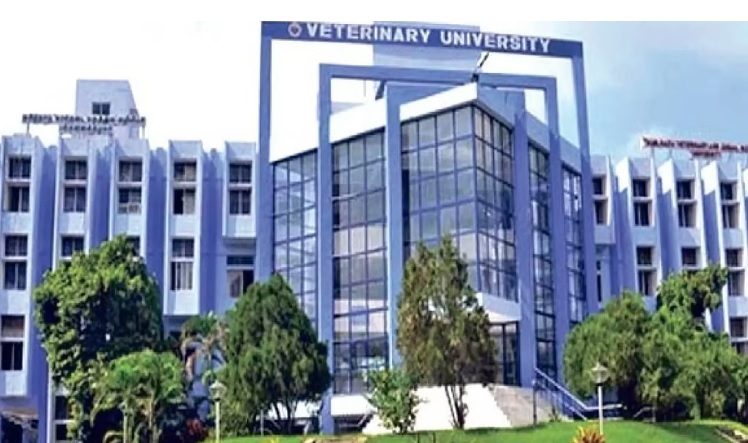
Tamil Nadu Veterinary and Animal Sciences University
TANUVAS blossomed on 20 September 1989 as the first Veterinary University in the country. Its seed was sown in 1876, when the Madras Veterinary College began as an agricultural school in Chennai. Today TANUVAS has seven veterinary colleges, a College of Food and Dairy Technology, a College of Poultry Production and Management, 10 research farms, 15 research laboratories and diagnostic centres, 20 University Training and Research Centres, three farmers' training centres and four Krishi Vigyan Kendras.
The TANUVAS library system comprises the University Library at Chennai and a well-established library at each of its nine colleges. The Madras Veterinary College Library, with over 1,00,000 volumes, is regarded as the finest veterinary library in the country. The libraries are fully automated and digitised with RFID security, biometric access and a cloud-based Web OPAC, with remote access through MyLOFT. TANUVAS is the top contributor to ICAR's KrishiKosh repository with more than 25,000 documents — about 9% of the total collection.
About Chennai
Capital of Tamil Nadu on the Bay of Bengal — a centre of commerce, education, culture and IT, known for its temples, arts and Bharatanatyam.
Weather in October
Maximum 30°C – 33°C, minimum 24°C – 26°C.
By air
Chennai International Airport (MAA) at Meenambakkam, about 20 km from the city centre.
By rail
Chennai Central and Chennai Egmore — the venue is just 1.5 km from both terminals.
Marina Beach, Kapaleeshwarar Temple, Fort St. George, Anna Centenary Library, Government Museum, Valluvar Kottam, Guindy National Park, Arignar Anna Zoological Park, DakshinaChitra Heritage Museum, Elliot's Beach and Birla Planetarium.
Accommodation on payment basis is provided on a first-come, first-served basis at the University Guest House, Sabbatical Hostel and Teachers' Hostel. Sightseeing to important places in and around Chennai is arranged on payment basis.
Dr. G. Rathinasabapathy
Organising Secretary, ICALUC 2026 · President, AALDI · University Librarian, Tamil Nadu Veterinary and Animal Sciences University, Madhavaram Milk Colony, Chennai – 600 051, Tamil Nadu, India